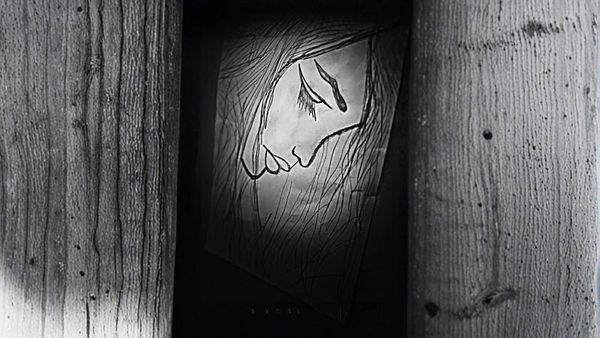
The Ache of Never Feeling Good Enough
What happens when survival becomes your operating system

There’s a type of pain that never appears on X-rays or blood tests. It lives deeper than broken bones, more persistent than any physical wound. It’s a pain so old and so quiet, it doesn’t even scream anymore, it just whispers, you’re not enough, on repeat, like a broken record your nervous system learned to play in childhood.
And you start to believe it. Not just intellectually, but in your bones, in your breath, in the way you enter every room already apologizing for taking up space.
You believed it when you were a child, trying so desperately to be good: perfect grades, a clean room, helping without being asked. You believed it when they raised their voices at your tears, telling you that your feelings were too loud, too inconvenient, too much for them to handle. You believed it every time you reached for comfort and were met with guilt instead of grace, criticism instead of compassion.
Somewhere along the line, that whisper didn’t just sit in the background of your thoughts. It moved to the front desk of your mind and became your operating system, the lens through which you interpreted every interaction, every relationship, every moment of your life.
The Roles You Learned to Play
You became the helper, scanning every room for what needed fixing. You became the mediator, translating between angry adults who couldn’t communicate without casualties. You became the peacekeeper, absorbing everyone else’s emotional chaos so they wouldn’t have to feel uncomfortable with their dysfunction.
You’ve become skilled at interpreting the shifting patterns of other people’s emotions. You learned to shrink when they needed to feel bigger, to dim your light when your brightness felt threatening to their darkness. You mastered the art of swallowing your voice so the world wouldn’t get too loud, too real, too honest for the people around you.
But nobody noticed the cost of your constant performance.
Nobody saw the internal bleeding, the slow hemorrhaging of your authentic self as you bled out trying to be who everyone else needed you to be. Nobody witnessed you flinch from your own needs, as if wanting something for yourself was a moral failing. Nobody saw the bone-deep exhaustion of always being “okay,” even when you were drowning in plain sight.
You learned to be a human shock absorber, cushioning everyone else’s impact while your foundation crumbled beneath the weight.
When Your Best Wasn’t Enough
It’s maddening, soul-crushing, really, to try and be everything for people who’ve already decided you’re simultaneously too much and not enough. It’s like being asked to solve an equation that was designed to have no solution.
They tell you to be honest and then punish you when your truth makes them uncomfortable. They tell you to speak up and then shame you when your voice disrupts their carefully constructed denial. They say they love you, but only when you play the sanitized, dimmed-down version of yourself they can tolerate.
You twist yourself into impossible shapes, performing emotional acrobatics that would win Olympic gold, trying to earn approval from people who were never capable of giving it freely.
And when you finally crack? When the mask slips and you cry, or rage, or tremble with decades of silence finally breaking loose like a dam that can’t hold back the flood anymore? When you show them the raw, unfiltered reality of what their treatment has done to you?
They step back and say, See? You ARE the problem. You’re too sensitive. You’re being dramatic. You’re remembering it wrong.
But you’re not the problem. You never were. You’re a mirror they can’t stand to look into, a reflection of their unhealed wounds, their capacity for harm, their inability to love without conditions.
Why It Shows Up Everywhere
This isn’t just “family drama” or something you should “get over.” This is trauma. This is learned survival. This is your nervous system doing exactly what it was trained to do in an environment where love was conditional, and safety was always temporary.
It’s why you stayed in romantic relationships where affection felt like a reward you had to earn through perfect behavior. It’s why you kept trying to prove yourself to friends who only showed up when it was convenient for them. It’s why you now confuse emotional neglect for “normal” and healthy relationships feel foreign, almost suspicious.
It’s why you still apologize for existing, for having needs, for taking up space, for feeling feelings that aren’t convenient for other people.
When you’re raised to walk on eggshells, constantly scanning for danger and adjusting your behavior to avoid emotional explosions, you carry that hypervigilant posture into every room, even when there’s no one left to hurt you. Even when you’re safe, your body doesn’t know it yet.
You become addicted to earning your place in people’s lives instead of simply existing in them.
You’re Allowed to Be Angry
The rage bubbling up in your chest? The fury that sometimes catches you off guard in quiet moments. It’s not wrong. It’s not selfish. It’s not ungrateful or vindictive or proof that you’re “just like them.”
It’s the sound of decades of self-erasure roaring back to life. It’s your soul screaming; I won’t disappear for you anymore. It’s every boundary you never learned to set, every word you swallowed, every time you said “I’m fine” when you were anything but; all of it demanding to be witnessed, to be felt, to be honored.
Your anger is sacred. It’s information. It’s your inner compass pointing you toward what you will and will not accept anymore.
You’re allowed to scream into pillows. You’re allowed to shake with the magnitude of what you survived. You’re allowed to be furious at the people who raised you to believe that love is something you have to earn through silence and obedience, through making yourself convenient and unthreatening.
Because here’s the truth they never told you: You never needed to earn your worth in the first place. You were born worthy. You arrived on this planet deserving love, safety, and acceptance, not because of what you could do or how well you could perform, but simply because you exist.
You Get to Choose Now
You’re an adult now. You have power you didn’t have as a child. You get to rewrite the rules that were written for you without your consent.
You don’t owe them your peace at the cost of your sanity anymore. You don’t have to answer the text that acts like nothing ever happened, pretending that decades of harm can be swept under the rug with forced pleasantries. You don’t have to swallow guilt that was never yours to hold, guilt for their choices, their dysfunction, their inability to love you the way you deserved.
You don’t have to show up to chaos just because you always have. You don’t have to be the family therapist, the emotional janitor, the designated fixer of problems you didn’t create.
You’re not here to be a dumping ground for other people’s unresolved pain. You’re not a recycling center for their trauma. You’re not responsible for managing their emotions or protecting them from the consequences of their behavior.
You’re here to heal. To take up space. To speak. To exist with a full heart and a full voice and a full life, even if that means walking away from those who taught you to be small. Even if it means disappointing people who were never really proud of who you are.
The Permission You’ve Been Waiting For
If nobody ever told you this before, let me be the first: You were always enough, even when they couldn’t see it, even when they tried to break it out of you with criticism and conditional love, even when you forgot it yourself.
You were enough when you were five years old, trying to understand why the adults were angry. You were enough when you were fifteen, desperate for approval you’d never receive. You are enough right now, reading these words, perhaps for the first time, allowing yourself to believe that your worth isn’t negotiable.
Let’s breathe together for a moment. Feel your lungs expand. Notice that you’re here, you’re alive, you survived. That little person inside you who learned to be small. They can rest now. You’re big enough to protect them now.
You are allowed to outgrow the versions of yourself that were only born to survive. You’re allowed to shed those old skins like a snake that’s grown too large for what once contained it.
This is your permission slip — signed by the only person whose signature matters: you.
Permission to be imperfect. Permission to set boundaries. Permission to feel your feelings without apologizing for them. Permission to want more than survival. Permission to become someone new; someone who exists not to manage other people’s emotions, but to live your own life fully, authentically, unapologetically.
The ache might always be there, faint as an old scar. But it doesn’t get to run your life anymore. You do.