The Language of Paper and Ink
How writing became my sanctuary from silence
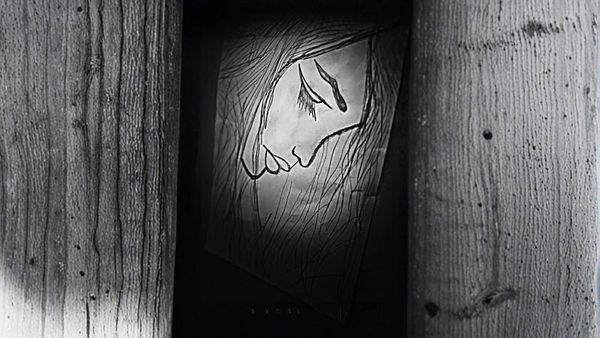
Somewhere in the quiet spaces between what I wanted to say and what I was allowed to feel, I learned that silence was safer than speech. Keeping my thoughts locked away was easier than risking the weight of someone else’s disappointment or anger.
I became an expert at swallowing words, every truth that felt too sharp, every hurt that seemed too inconvenient, every “that’s not right” that might disturb the fragile peace. My throat became a cemetery of unspoken thoughts, each buried word adding to the ache I carried but couldn’t name.
Writing became my only form of safe communication. While spoken words felt like landmines that could explode at any moment, written words were different. They were mine to shape, to hold, to keep, or to share as I chose. On paper, I could be honest without watching someone’s face change. I could speak my truth without immediate judgment or interruption.
Even now, my first instinct is still silence. The words are right there, burning in my chest, begging to be heard, but my mouth clamps shut out of habit. I smile and nod and agree while something inside me screams.
When someone asks me a question, any question, I freeze. The hesitation isn’t because I don’t have thoughts or opinions. It is because I genuinely lack the ability to translate my thoughts into words that are safe to express aloud. The space between thinking and speaking feels vast and treacherous. So, I stumble over simple responses, or worse, I say nothing at all.
“How are you?” they ask.
“Fine,” I lie, because communication hurts, even when it shouldn’t. Because the real answer, the honest answer, feels too big, too complicated, and too risky for casual conversation.
But give me a blank page, and suddenly I remember who I am. Suddenly the rules don’t apply. The cursor blinks at me like it’s saying, “Here, this space is yours. No one can take this away from you.”
Writing still feels like the only true safety I have. In conversation, I constantly calculate whether my words will offend. Is this too much? Am I talking too long? But when I write, those voices quiet down. The page holds space for my messy thoughts, my half-formed ideas, and my contradictions. It doesn’t rush me or misinterpret my silence as agreement.
So, I bleed onto the page. I write the words I cannot speak aloud. I voice what feels too risky to say out loud. The page doesn’t flinch. It doesn’t change the subject when things become uncomfortable. It doesn’t tell me I’m being dramatic or that I’m inconveniencing anyone.
Here, I can take my time. I can delete and rewrite until the words feel right. I can explore ideas without someone cutting me off or assuming they know what I’m trying to say. I can be vulnerable without watching for warning signs in someone else’s expression.
Some nights I write poetry that makes me cry, not because it’s good, but because it’s finally, brutally honest. Some mornings I scribble down dreams that feel more real than my waking life. Occasionally, I write letters that I will never send, expressing everything I wish I could communicate to those who have hurt me, thanked me, or confused me. Sometimes I write the same sentence over and over until it stops feeling like a lie: I am enough. I am enough. I am enough.
I find it ironic that as someone who finds it difficult to say "hello" without overanalyzing it, I am able to write extensively about the most intricate aspects of human existence. The quiet communion between my thoughts and the page is where my truest self emerges, not in conversation.
And maybe that’s the point. Maybe the page is where I can reclaim myself. Where my suppressed voice learns to sing again, even if it’s just in whispers at first. Maybe the page is how I learn to trust my own words again—by practicing them in the only place that has ever felt completely safe.